
By Dr. Raz Velgis, Beaches Periodontics
The short answer
Not always, and often not at all. Zygomatic implants (anchored in the cheekbone) and pterygoid implants (anchored behind the upper jaw) are two well-known options for patients with severe upper-jaw bone loss, but they’re not the only path to a full-arch restoration. Remote anchorage techniques can often achieve stable support using the bone that’s still available in more accessible parts of the jaw, avoiding the zygomatic and pterygoid regions altogether.
Why avoiding zygomatic and pterygoid anchorage matters
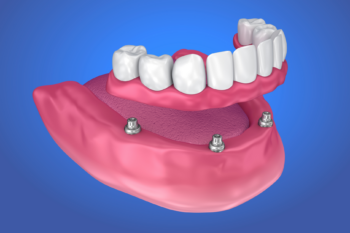
Zygomatic and pterygoid implants are valuable tools, and for some patients with the most severe bone loss, they’re genuinely the right answer. But they also involve anchoring into bone that’s further from the treatment site and more technically demanding to access. When a patient’s case allows for it, achieving the same stable, immediate-load result using more conventional implant positions — angled or positioned to reach the bone that’s actually available — means a less complex surgical path to the same outcome: a fixed, full-arch restoration placed the same day.
The goal either way is the same: enough stable anchor points to support an immediate-load hybrid restoration. Remote anchorage is one way to get there without the added complexity of zygomatic or pterygoid placement, when the case allows for it.
How this fits into full-arch treatment planning
Every full-arch case starts with a CBCT scan to map exactly how much bone is available and where. That imaging is what determines whether a case is a good fit for remote anchorage, whether ridge augmentation is needed first, or whether zygomatic or pterygoid implants are genuinely the better path. There’s no one-size-fits-all answer — it depends entirely on your specific bone anatomy. See our implant dentistry page for the general approach to immediate hybrid restorations.
What this means if you were told you need zygomatic implants elsewhere
If you’ve been told your only option is zygomatic or pterygoid anchorage, it’s worth getting a second opinion with fresh imaging. Bone loss patterns and treatment planning approaches vary, and a case that looked like it needed one approach on one set of images may have other options once it’s fully evaluated.
What the day of treatment looks like
Whether your case ends up using remote anchorage, zygomatic implants, or a staged approach with ridge augmentation first, the goal on treatment day is the same: enough stable implants placed to support an immediate-load hybrid restoration, so you leave with a full, fixed set of teeth rather than a healing period with nothing in place. The final restoration follows once the implants have fully integrated. See our implant dentistry page for more on how the immediate-load process works.
Full-arch cases are complex by nature, and the planning conversation — reviewing your CBCT scan, discussing anchorage options, and setting expectations for the treatment day — is as important as the surgery itself. Bring any prior imaging or treatment plans from other consultations if you’re seeking a second opinion; they can speed up how quickly we’re able to give you a clear answer.
Frequently asked questions
Are zygomatic implants ever necessary?
Yes, for some patients with the most severe upper-jaw bone loss, zygomatic or pterygoid implants are genuinely the right option. Imaging determines which approach fits your case.
Is remote anchorage as strong as zygomatic anchorage?
When a case is a good fit for it, remote anchorage can provide stable, immediate-load support for a full-arch restoration. Candidacy depends on your specific bone anatomy.
How do I know which approach is right for my case?
A CBCT scan and clinical evaluation will map your available bone and determine the right anchorage approach. See our implant dentistry page or schedule a consultation.
Been told you need zygomatic implants? Get a second opinion.
Jacksonville Beach: (904) 273-4373 · Fernandina Beach: (904) 990-1079 · or schedule a consultation.